

Variation of Training
Posted on March 21, 2018To maximise performance and reduce risk of injury it is important to have a variety of running in your program. Once you start looking into adding some variety you will come across a lot of different terminology used to describe the different types of runs. Considering there are only so many days in a week how do you decide which runs will be beneficial to you? Because we are all about making Runner’s lives easier, in this article we aim to brief you on the different training zones that are useful for improving your running performance (Jack Daniels 2005).
And of course, if you would like some assistance on how to build these 4 types of running into your running program contact our team at SPARC!
Easy
The easy run makes up the largest percentage of most running programs. It describes a running pace that feels comfortable and can be maintained for an extended period of time without stress.
Easy running is prescribed for warm ups, cool downs, base building, long runs and sessions following and preceding “harder effort” days.
This “relaxed run” is an important part of any program for building a base of aerobic capacity. For track athletes it is their winter running and for longer distance runners it is the foundation on which they prepare for their endurance events.
The easy run is a great run to do with a team mate or training partner. At the right intensity you should be able to comfortably maintain a conversation throughout the run.
Tempo/ Threshold
Tempo or Threshold running helps us bulid anaerobic capacity. Faster than easy pace but not quite race pace, Tempo and Threshold session are run on the “threshold” of building up lactic acid.
While it is not an exact science and of course your effort level will vary with the type of tempo or threshold session you are doing, but generally these sessions are run at 80%-90%.
Threshold running is great for improving endurance, and perhaps developing ‘tolerance’ to running close to race pace (but in a controlled setting).
Intervals & Fartlek
Interval training is great training for a runner to improve their aerobic capacity. Interval running is performing efforts at a ‘hard running pace’ (but not all out effort) followed by an active recovery (usually slower running/jogging) for a short time frame. Recoveries may be the same time frame as the effort or slightly shorter (normally 1-3minutes), e.g. 4 x 3minute efforts with 90 seconds active recovery. Due to not having a ‘complete’ recovery, each interval effort will require more effort as the session gets deeper.
While Interval training has great physiological benefits, it also is great to create ‘variety’ throughout your weekly training cycles. It also creates an environment to practice the pace you may want to race and learn to ‘tolerate’ that pace.
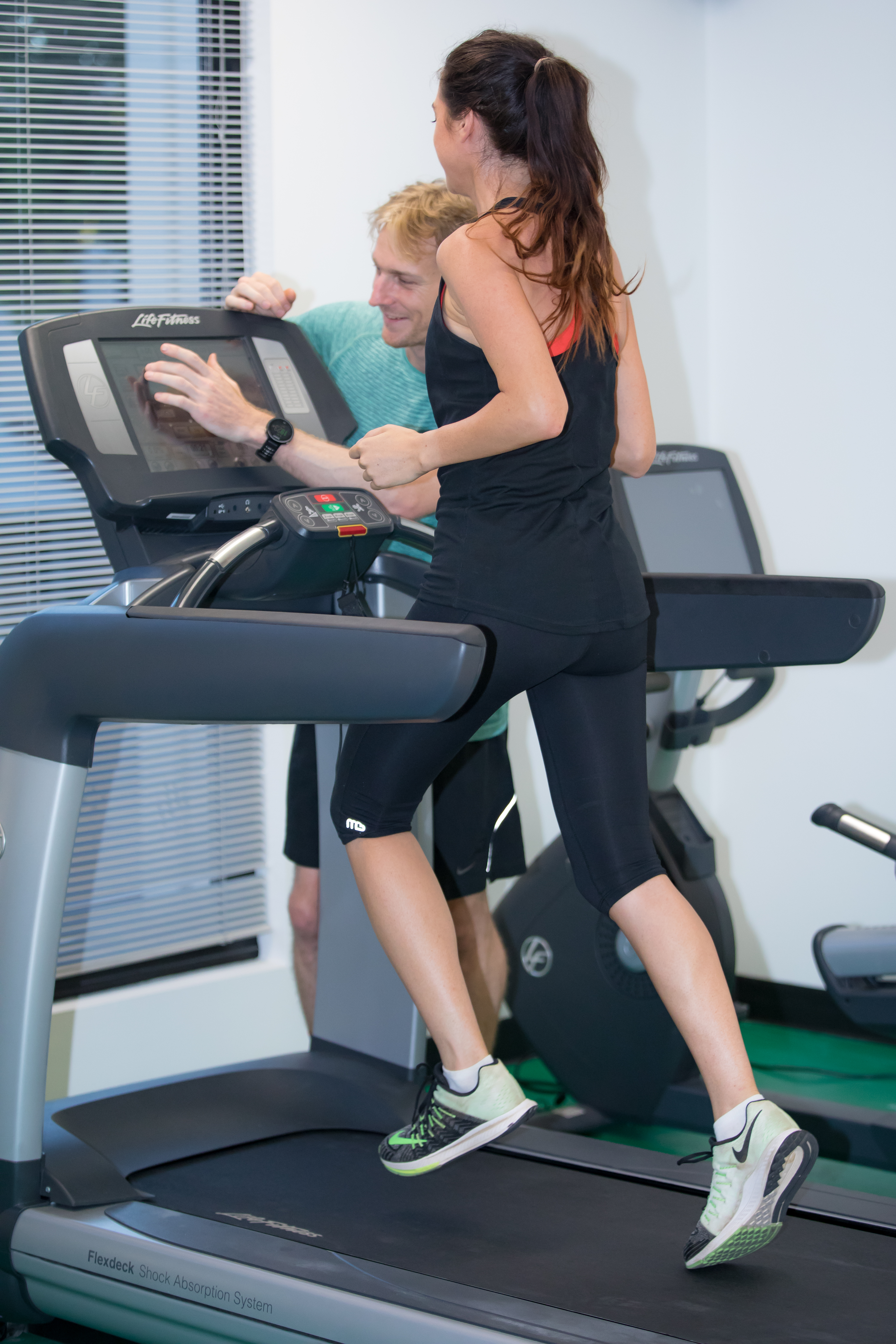 Podiatrist Michael Nitschke
Repetition
Repetitions are all about quality running and finding your running form. In these runs you will run above race pace.
With more generous recoveries than Intervals, in a repetition session you will try and achieve close to the same quality of repetition each time.
Repetitions are a great way to get you “lighter on your feet”, improve your running mechanics and a great opportunity to ‘think’ about your technique.
Benefits of Varying Training – Load Management
While it is very important to understand the varying training zones in order to better your conditioning relative to running, it’s also worth noting that each training zone will ‘tend’ to alter the type/degree of ‘load’ on the body. Nielsen et al 2014, looked in volume vs pace in relation to running common running injuries. If runners tend to focus on excess volume (easy/long runs) it seems that they may be prone to knee related running injuries, while those that focus on interval/repetition running may tend to load the lower-leg more, and are at higher risk of calf, Achilles and foot related injuries.
It could be assumed that the gait changes that occur from moving from easy pace through to repetition pace may lead varying load on your body (easy running may have a higher percentage of heel strike – that leads to increase vertical force loading and knee load while faster running may load the lower-leg more so due to increase midfoot/forefoot loading).
Understanding your training zone load allows practitioners to hone into working out why you may develop persistent ongoing running related injuries. Not only are we able to accommodate/alter/vary your load to decrease risk of injury, we can keep you running and developing you in areas that will assist you long term.
Want to add some variety to your training program or would like some guidance on what paces you should be hitting in these sessions? contact our team at SPARC who will hook you up with a booking with our Accredited Sports Podiatrist Michael Nitschke!